While the terms “silo” and “grain bin” are frequently used interchangeably, they refer to two distinct engineering methodologies for bulk material management. In an industrial context, the primary differentiator is the atmospheric environment: grain bins are designed to stabilise dry commodities through continuous aeration or to facilitate fermentation, whereas silos are hermetically sealed and hygienically designed for food processing plants.
What is a Grain Bin?
A grain bin is a wide, cylindrical metal structure typically characterised by its conical peaked roof, corrugated steel walls, and internal aeration system. This design is engineered to protect dry commodities such as corn, soybeans, and wheat, which require a stable environment to maintain their quality and prevent germination or moisture-related spoilage.
In some cases, grain bins can be used for fermentation. A key example of this is in coffee processing, where the coffee beans are stored at specific temperatures or moisture levels to further develop its flavour.
What are Grain Bins Made Of?
Modern grain bins are made from corrugated zinc-coated steel, which provides the structural strength needed to withstand the massive outward pressure exerted by the stored bulk solids. At the same time, the protective zinc plating safeguards the metal from oxidation and harsh weather.
What are Silos?
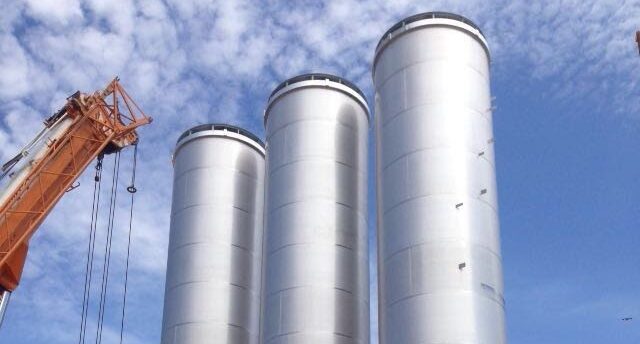
A silo is a tall, high-capacity structure engineered to store bulk materials, such as flour, salt, sugar, and milk powder. More robust silos can also be used to store cement, coal, and sawdust. Unlike grain bins, silos are usually hermetically sealed, which means they are completely airtight prevent changes in the material. An example of this can be when high humidity causes mould to develop in flour, or when the same causes cement to bind together.
What are Silos Used For?
In food processing, Silos are used to facilitate the transition from raw ingredients to developed products (e.g. bread, chocolates, or instant noodles). By maintaining an airtight or even air-conditioned (dehumidified) environment, these Silos can extend the shelf life of the raw ingredients, ensuring that the production can go on without interruption due to a lack of material.
Beyond food processing, silos are critical for the high-capacity storage of dense industrial materials such as coal and cement. In these applications, the vertical design minimises the footprint of the storage facility while protecting the contents from environmental moisture, ensuring that coal remains combustible and cement remains a free-flowing powder ready for construction.
Silo vs. Grain Bin: Is There a Difference?
Although both structures provide agricultural storage, the difference between silo and grain bins lies in their physical form, the moisture content of the contents, and the preservation method.
1. Visual Distinctions
Silos are easy to spot because the structures are tall, narrow, and tower-like. They often consist of smooth metal or cast concrete to maintain an airtight seal. In contrast, grain bins appear as squat, wide structures made of shiny, corrugated metal with visible roof vents for air exchange.
2. Stored Contents & Moisture Levels
The technical requirements for these structures differ based on the moisture content of the stored material. Silo types designed for food processing manage the raw ingredients by driving away moisture and hot air, emphasising bulk material flowability and shelf life. In cases like these, the moisture levels are usually kept at less than 2% within the material. While grain bins also facilitate dry storage to help inhibit mould growth and insect infestation, the moisture levels for these bins can be higher at up to 15%, given the internal moisture content of the grain itself.
3. Preservation Mechanism
Silos operate on the principle of isolation and must be sealed tightly, as any air entry exposes the raw material to humidity or bacteria in the air, which can cause the material to spoil rapidly. Conversely, a grain bin is engineered for continuous ventilation. These systems use perforated floors and high-capacity fans to move air through the material, maintaining a stable environment and keeping the crop dry.
Engineer the Perfect Storage Solution Today

As a leading pneumatic conveying system manufacturer, Pneu Powders Systems delivers advanced material-handling technology for storage silos or grain bins. Our engineers streamline the entire process, from integrating silo design considerations to synchronising bulk storage with other industrial food processing equipment on your production line.
Book a technical consultation with our engineering team today to design a bespoke handling solution tailored to your specific operational goals.