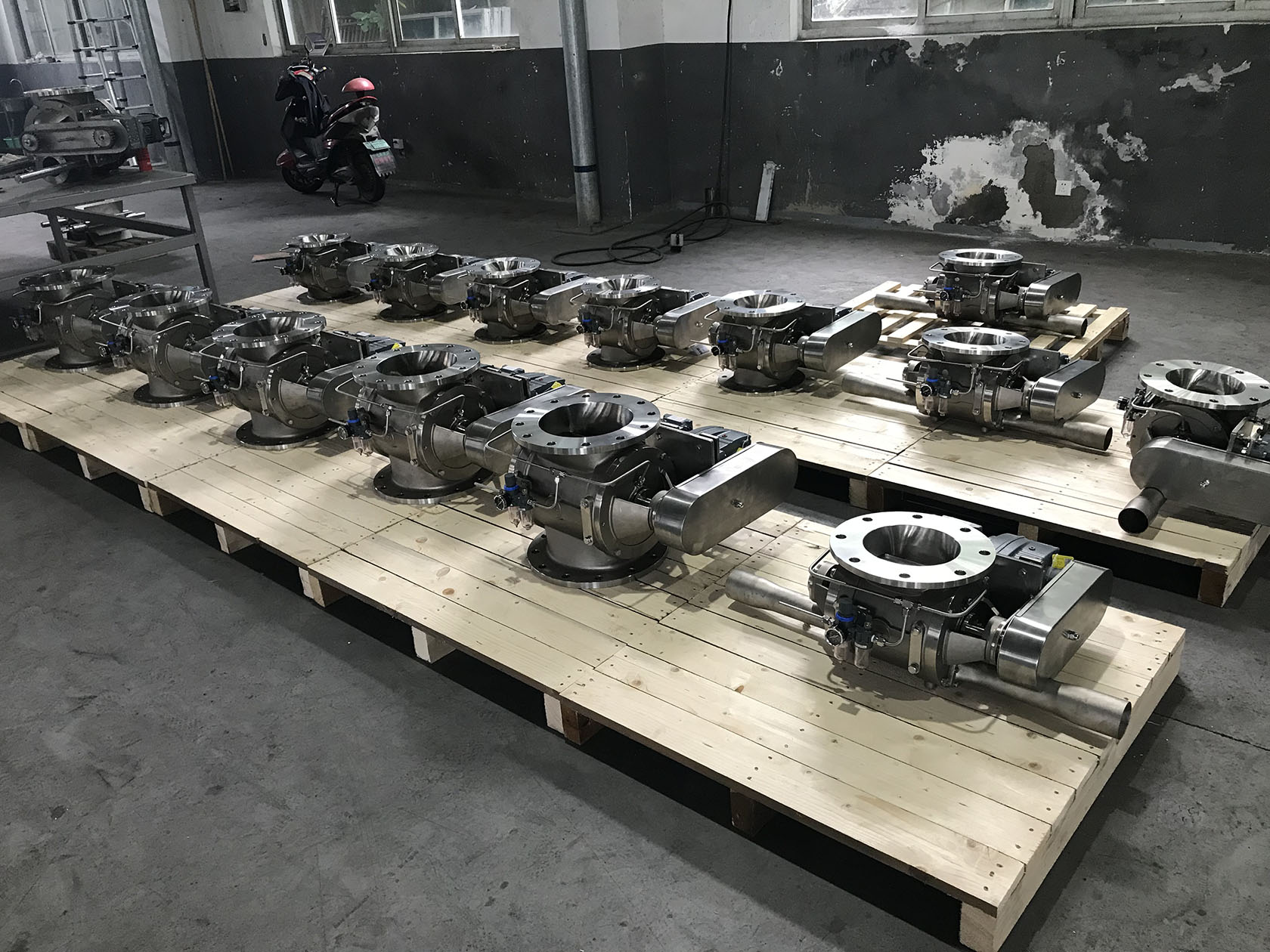
The rotary airlock valve working principle centres on creating a mechanical seal that permits material flow while isolating pressure zones. This rotary airlock is fundamental to pneumatic conveying systems as it prevents air loss. By establishing a pressure barrier, it ensures consistent material throughput and system stability across lean- and dense-phase conveying lines.
What is a Rotary Airlock Valve?
In bulk material handling, a rotary airlock is a mechanical device used to regulate the transfer of powders and granules between different pressure zones. It operates as a mechanical gatekeeper, regulating product flow while minimising the escape of compressed air or gas.
The primary functions of an airlock rotary valve include:
- Pressure Isolation: Maintaining a robust seal between high and low-pressure zones to prevent system de-pressurisation.
- Flow Regulation: Rotating vanes control the volumetric feeding of materials into the production stream.
- Containment: Robust sealing stops dust from escaping in pollution control setups.
- Discharge Control: Gravity-fed chambers unload filtered solids into atmospheric areas without compromising line pressure.
How Does a Rotary Airlock Valve Work?
The rotary airlock valve relies on the mechanical synchronisation of a casted outer housing, multi-vane rotor, drive shaft, endplates, and high-performance shaft seals to move material while isolating air environments.
1. Core Mechanical Movement
The rotation of the rotary airlock valve creates a series of moving chambers. As the rotor turns, at least two vanes on each side of the housing are typically in contact, creating a multi-stage airlock. This minimises air leakage, effectively preventing a pressure “short circuit” that would otherwise bypass the valve and disrupt the material flow.
2. Volumetric Pocket Displacement
Each rotor pocket acts as a fixed-displacement volume, capturing a specific “bite” of material at the inlet. This refers to the precise quantity of product that fills the void between two rotor vanes, effectively isolating a measured batch from the main supply. The correlation between rotor RPM and pocket volume defines the hourly throughput, ensuring a steady, pulse-free feed for downstream processing equipment.
3. Precision Tolerance Sealing
Engineering a rotary airlock requires balancing tight clearance, which is the microscopic gap between vane tips and the housing. This gap must be small enough to stop blow-back air leakage yet generous enough to accommodate thermal expansion as friction and product temperatures rise during operation.
4. Gravitational & Forced Discharge
The bulk material completes a 180-degree journey from the top inlet to the bottom discharge point. While gravity suffices for most free-flowing dry powders, cohesive or semi-solid materials require specialised rotor geometry. V-shaped, scalloped, or reduced-volume rotors installed within the rotary airlock feeder physically assist in shedding sticky products. This mechanical aid during the discharge phase prevents residue or cross-contamination.
5. Differential Pressure Management
Bridging two distinct pressure environments, the airlock rotary valve manages the transition between areas such as a neutral silo and a high-pressure line. The valve must maintain a seal to contain the system pressure. Otherwise, air migrates “upward” through internal clearances. This phenomenon, known as blow-back, creates turbulence in the hopper that causes material bridging and halts production in lean- or dense-phase systems.
Considerations for Rotary Airlock Valve Selection
For a dense-phase conveying system design to operate at peak efficiency, evaluating these operational parameters is necessary to ensure the rotary airlock valve withstands the rigours of your production environment.
1. Product Characteristics & Composition
Particle size and abrasiveness dictate the choice of rotor materials and coatings. While stainless steel is suitable for many food applications, abrasive granules require hardened coatings to prevent wear on the housing. Proper material matching for each rotary valve extends service life and prevents metallic contamination in sensitive production lines.
2. Target Hourly Throughput
Specifying a rotary airlock involves calculating pocket fill efficiency rather than simply increasing rotor speed. Excessive RPM can create centrifugal effects that prevent pockets from filling, reducing actual throughput. We balance rotor volume and speed to ensure a consistent, metered flow that meets your hourly production targets.
3. System Pressure Differential
The rotary airlock valves must be rated for the specific pressure drop across the system. If the valve cannot withstand the differential, “blow-back” air escapes through the clearances. This upward air leakage hinders material in-feed, causing turbulence and reducing the conveying line’s overall capacity.
Optimise Your Powder Handling Performance with Expert Engineering

Relying on off-the-shelf components often introduces unnecessary risks to your production efficiency. At Pneu Powders Systems, every rotary airlock is integrated into a bespoke solution to ensure uncompromised quality and long-term reliability. Whether you are handling fragile grains or cohesive semi-solids, we can custom-engineer a robust system that secures your operational uptime.
Our expertise in rotary valve types and their applications ensures that every component is fit for purpose, whether integrated into high-hygiene milk powder processing equipment or heavy-duty industrial lines. By understanding the unique regulatory and material demands of food and beverage manufacturing, we deliver turnkey solutions that eliminate bottlenecks.
Consult with our engineering team today to develop a custom concept tailored to your throughput needs.