
Pneu Powders was engaged to design, supply, install, commission and integrate a complete crumb tower for the manufacture of chocolate crumb. Chocolate crumb production involves a series of interconnected process steps, each of which must be carefully balanced to achieve consistent product quality and throughput. The project brought every stage of the process together into a single automated manufacturing facility, allowing the customer to produce chocolate crumb at industrial scale within a purpose built plant.
Chocolate Crumb Tower Project
Application
Chocolate crumb manufacturing
System type
Turnkey process plant
Components
15
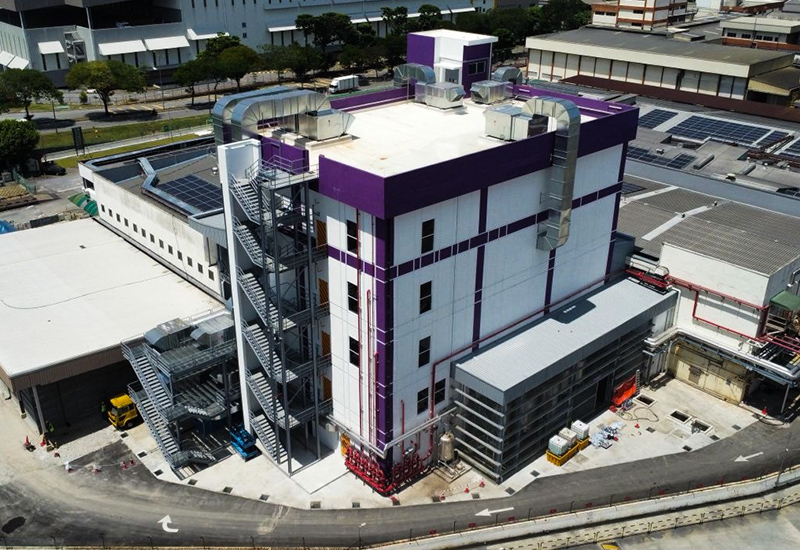
Project overview
Project configuration
From the unloading and batching of bulk ingredients through crystallisation, cooling, screening, transfer, storage and final handling, Pneu Powders was responsible for ensuring that each process stage operated seamlessly as part of one integrated system. Sugar and milk powder are received through dedicated unloading systems, while cocoa butter and cocoa liquor are unloaded, melted and recirculated before storage and weighing. A sweetened condensed milk rehydration system and a purpose built crumb reactor and drying system sit at the core of the process.
Lump breaking, product screening and batch cooling equipment condition the finished crumb, while tube chain conveyors and bulk bag filling systems handle transfer and final packing. Dust collection, pneumatic conveying interfaces, utilities, and electrical and control systems with full PLC and HMI integration tie every stage together. All equipment was engineered and commissioned as a fully integrated process solution to support continuous operation and product transfer throughout the manufacturing cycle.
Project equipment
- Sugar and milk powder unloading systems
- Cocoa butter and liquor unloading, melting and recirculation
- Storage and weighing equipment
- Sweetened condensed milk rehydration system
- Crumb reactor and drying system
- Lump breaking equipment
- Product screening equipment
- Batch cooling systems
- Tube chain conveyors
- Bulk bag filling systems
- Dust collection systems
- Pneumatic conveying interfaces
- Electrical and control systems
- PLC and HMI integration
- Utility and ancillary systems
Project notes
The Crumb Tower is one of Pneu Powders’ most comprehensive food manufacturing projects, combining process engineering, bulk solids handling, automation, electrical integration, installation and commissioning within a single turnkey scope. Multiple disciplines, suppliers and stakeholders were brought together under a common engineering framework to ensure smooth commissioning and operation. The project demonstrates our capability to deliver complete process plants for the food industry, extending well beyond standalone material handling to process equipment, controls, utilities and full plant integration. Through close collaboration with the customer at every stage, the Crumb Tower was taken from concept to a fully operational manufacturing facility.
Looking for a solution like these?
Speak to our team about your powder handling or conveying requirements.
